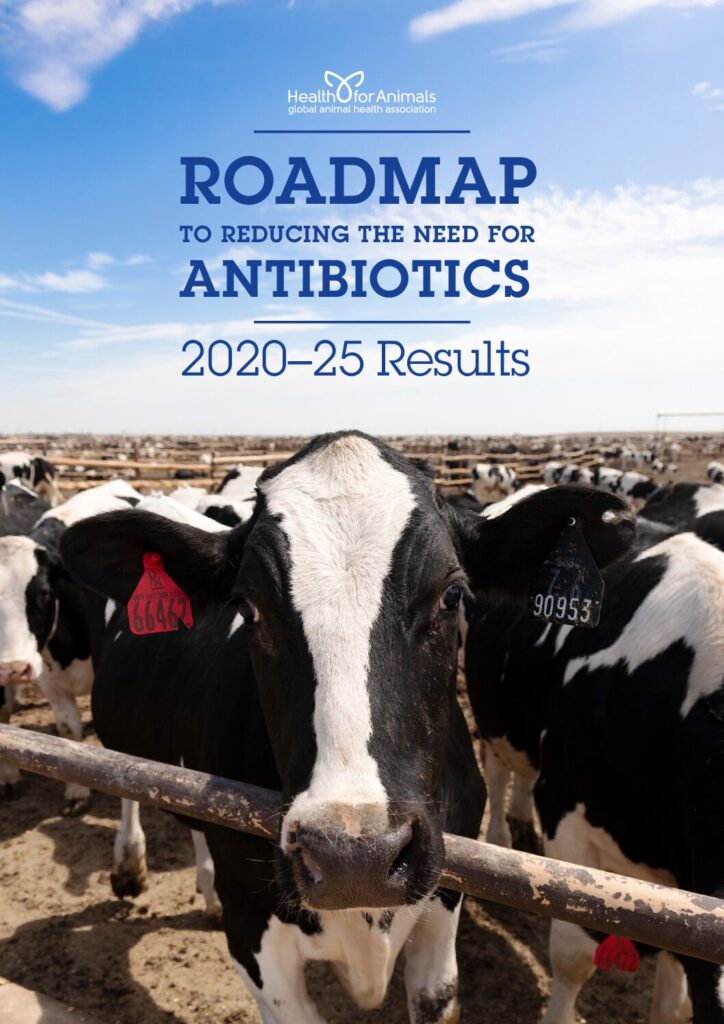
Reports: Roadmap to Reducing the Need for Antibiotics: 2020–25 Results
At a glance
HealthforAnimals Members committed to 25 measurable goals for 2020-25 in our Roadmap to Reducing the Need for Antibiotics. Nearly every goal was completed. This includes:

$13.8 billion (est.)
invested in Research and Development

109 vaccines
brought to market

52 new diagnostics tools
brought to market

Over 2 million medicine users
trained in responsible use

Close to $40 million
in veterinary scholarships and research grants

100+ new scientific publications
that helps improve understanding of veterinary pathogens and AMR
These efforts are helping reduce the need for antibiotics and advance responsible use. Read on for our final results against all 25 goals.
Introduction
In November 2019, HealthforAnimals Members launched the ‘Roadmap to Reducing the Need for Antibiotics.’ It set out a sector-wide strategy to advance responsible use and addressing antimicrobial resistance (AMR) globally. Alongside that vision, Members committed to 25 measurable goals, from R&D investments to One Health cooperation, to be delivered over the following five years.
This is our final report on those commitments, and the overwhelming majority have been met.
However, the numbers are only part of the story. The Roadmap reflected our belief that advancing responsible use of antibiotics requires a focus on the underlying need for these medicines. Disease remains an ever-present threat for animals, which means targeted use of antibiotics continues to be necessary for responsible animal care. However, the goal must be to improve prevention and surveillance, so disease pressure can be reduced and there is less need for these medicines.
It has been encouraging to also see this vision for ‘reducing the need’ increasingly reflected by partners across the One Health community over the past five years:
- FAO launched the RENOFARM initiative in 2024 to ‘Reduce the Need for Antimicrobials on Farms for Sustainable Agrifood Systems Transformation.’ We were proud to partner with them on a publication showing ‘How Prevention Can Reduce the Need for Antibiotics’1
- WOAH’s global AMR Progress Report in 2024 highlighted2 ‘significant action undertaken in animal health…reducing the need for antimicrobials globally’
- The new Global Action Plan on AMR (GAP) calls on3 actors to ‘intensify infection prevention…to reduce the need for antimicrobials’, marking a shift from the last GAP that focused on the ‘use’ of these medicines.
Importantly, this shift in attitude and vision has helped deliver results within animal health. Monitoring of bacterial infections in animals shows that resistance to critically important antibiotics is generally low, and the primary source of AMR-resistant infections in people remains other people.4 Furthermore, global and national level data shows steep declines in the need for antibiotics in animals (See below).
We are proud of what our sector has delivered, but the work does not stop. Opportunities still exist to improve disease prevention, reduce the need for antibiotics and remain vigilant against resistance. We will support this by continuing to invest in research and development, bring new vaccines and diagnostics to market, train veterinarians and medicine users, and strengthen prevention. Our efforts will continue, guided by the lessons of the Roadmap and the past five years.
However, AMR is a One Health challenge, and progress only goes as far as collective will allows. We encourage One Health partners across human health, agriculture and environment to also consider clear, measurable commitments. We can make the greatest difference through collaboration and collective effort.
To the partners who contributed to this work: thank you. The Roadmap may be complete, but the commitment behind it is not. We look forward to continuing to advance this vision in years ahead.

Carel du Marchie Sarvaas
Executive Director, HealthforAnimals


Dr. Armin Wiesler
President,
HealthforAnimals
Our commitments to
Research & Development
If we are to continue to maintain and improve animal health as well as reduce the need for antibiotics, we will need new innovation. HealthforAnimals Members made the following five commitments in our Roadmap to Reducing the Need for Antibiotics to advance our R&D between 2019 and 2025.
Invest at least $10 billion in research and development
Result:
$13.8 billion invested
Achieved
Deliver at least 100 new vaccines
Result:
109 vaccines delivered*
Achieved
Deliver at least 20 new diagnostics tools
Result:
52 tools delivered
Achieved
Deliver at least 20 new nutritional enhancement products
Result:
12 products delivered
Action Continuing
Deliver at least 30 other products that can reduce the need for an antibiotic by reducing animal stress or boosting the natural immune system
Result:
19 products delivered
Action Continuing
* 36 specifically address bacterial disease while others address issues like viral disease that can lead to or exacerbate secondary bacterial infections.
Our commitments to
One Health
In addressing AMR, we must recognize that this is not an issue limited by species or location. AMR affects animals, people and the planet, and can only be addressed by recognizing the intersection of all three. HealthforAnimals Members made the following two commitments to help provide a One Health lens to our work.
Deliver new tools that reduce the likelihood of human exposure to an antimicrobial resistant pathogen
Achieved
Result: HealthforAnimals Members offer a wide range of tools that reduce the risk of resistant bacteria developing in animals, which supports public health. This is one reason why studies have found resistance to highest-priority critically important antibiotics for human medicine is generally ‘absent’ or ‘low’ in animal populations.5,6
Tools offered by HealthforAnimals Members included:
- Animal vaccines against zoonotic public health threats like Salmonela, E. coli, Campylobacter.
- Nutritional products that improve gut health and defend against zoonotic pathogens.
- Diagnostic tests to accurately detect bacterial infection and support swift treatment.
- Guidance for the rational use of antimicrobials to help veterinary professionals choose the right medicine that reduces the risk of resistance development.
Members have also undertaken partnerships with universities, international consortiums, and other global stakeholders to support new research to better understand disease in animals and zoonotic transfer pathways in order to better protect people and reduce the need for antibiotics in animals.
Conduct an AMR risk analysis for every new antibiotic brought to market
Achieved
Result: One novel antibiotic was brought to market, supported by a risk analysis.7
Our commitments to
Communications
Reducing the need for antibiotics can only be possible when the importance, benefits, scientific basis, and barriers are properly understood. HealthforAnimals Members made the following four commitments to help our partners and stakeholders recognize how we can mutually advance this vision.
Strengthen communications on benefits of biosecurity, in-feed supplements, vaccinations, and products that support good animal health
Achieved
Result: All HealthforAnimals Members offered robust communications campaigns and materials on the value of preventative care in animal health.
Communications Spotlight: Reducing the Need with the United Nations
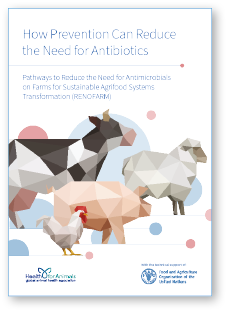
In 2024, HealthforAnimals worked with the UN Food and Agriculture Organization (FAO) on the publication How Prevention Can Reduce the Need for Antibiotics, a report supporting FAO’s RENOFARM initiative. The report documents how vaccination, biosecurity, nutrition, genetics, and digital technologies can reduce on-farm antibiotic use drawing on case studies from aquaculture, poultry, and livestock systems worldwide. It provides a practical evidence base for the 100 countries FAO aims to enrol in the 10-year initiative.
Issue Roadmap Updates in 2021 and 2023
Achieved
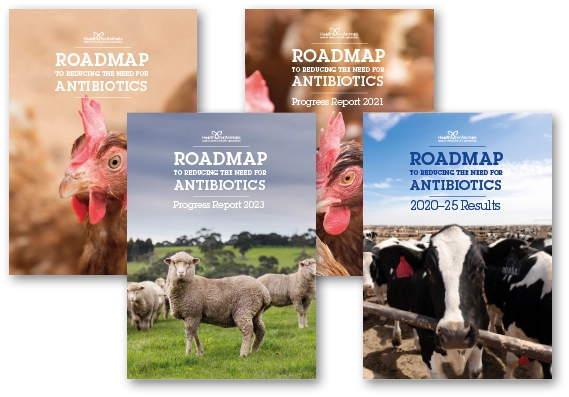
Result: Progress Report were delivered in 2021 and 2023 with this final summary report issued in 2026. Progress Reports were translated into multiple language including French, Spanish, Portuguese and Chinese.
Participate in forums and public dialogues to help build understanding of risks, benefits, and actions that different stakeholders can take to improve public health outcomes in the fight against AMR
Achieved
Progress: HealthforAnimals and its Members have been active and vocal in forums across the globe promoting One Health collaboration, antibiotic stewardship, and strategies for reducing antibiotic need in animals.
Types of major forums where HealthforAnimals and Members spoke or participated included:
- United Nations Food and Agriculture Organisation.
- World Organisation for Animal Health.
- United Nations High Level Meeting on AMR.
- World Economic Forum.
- United Nations Global Leaders Group on Antimicrobial Resistance.
- U.S. Presidential Advisory Council for Combatting Antibiotic Resistance.
- News outlets such as Reuters and Financial Times.
Issue regular report(s) and/or white paper(s) identifying barriers to adoption of prevention tools (e.g. vaccination, biosecurity, etc) and how they can be addressed
Achieved
Progress:
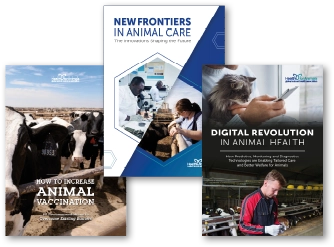
Between 2019 and 2022, HealthforAnimals published three major reports identifying barriers to prevention tool adoption: How to Increase Animal Vaccination (2019), New Frontiers in Animal Care (2021), and Digital Revolution in Animal Health (2022).
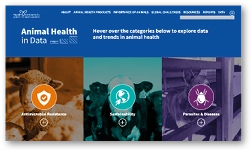
In 2022, HealthforAnimals built Animal Health in Data, a publicly accessible resource presenting the latest evidence on antibiotic use, AMR trends, and the impact of prevention across global markets.
In 2025, HealthforAnimals published Actions Needed to Implement the 2024 Political Declaration on AMR, providing governments with a concrete roadmap for translating high-level political commitments into on-the-ground policy action.

Our commitments to
Veterinary Training and Access
Veterinarians and veterinary paraprofessionals are on the frontline of the battle against AMR, using their expertise and knowledge to make a difference. They are trained to use antibiotics in a responsible manner that reduces animal suffering while limiting the emergence of resistance. HealthforAnimals Members made the following six commitments to improve veterinary knowledge by 2025.
Provide clear labels on every, single product
Achieved
Progress: All HealthforAnimals Members provide comprehensive labels on every medicine sold. Labels will differ depending upon the market and regulatory requirements, but the common goal is to provide clear information to the end user.
Information on labels provided by HealthforAnimals Members include information such as:
- ‘Indications of use’: The situations and diseases where the medicine is approved for use.
- Dosage and Administration: Detailed instructions for how to administer the medicine effectively.
- ‘Adverse Reactions’: List of possible side effects from a medicine that should be monitored.
- Withdrawal Periods: Amount of time a farmer must wait after administering the medicine before slaughter.
- Pharmacology: Clinical explanation of how the medicine functions, efficacy levels, etc.
- Precautions/Warnings: Cautions for the user (e.g. Not for Human Use) and information on what to do in case of an accident (e.g. accidental human injection).
- Contact: Contact information for the manufacturer to report adverse events or other issues.
Note: this is not an exhaustive list and product labels may include other details.
Make technical guidance available to all product users
Achieved
Progress: All medicines sold by HealthforAnimals Members include detailed guidance on the label and accompanying materials. Furthermore, contact information is available on the label to seek additional detail as needed. Other animal health products such as diagnostics and monitoring technologies also include clear instructions on proper use of the product for accurate results.
Train more than 100,000 medicine users in responsible use
Progress: Members directly trained 268,000 veterinarians, farmers and medicine users through various partnerships and initiatives. Through ‘Train the Trainer’ style programs, an additional 1.77 million people have received valuable instruction on disease control and responsible medicine use. Combined, this represents over 2 million people trained from 2020–25.
Achieved
Direct Training
Result:
268,696 people trained
Indirect Training
Result:
1.77 million people trained
Undertake at least 15 veterinary training partnerships
Progress: HealthforAnimals Members undertook at least 25 partnerships. These include activities such as:
- Partnership with GALVMed to train veterinarians in Senegal on preventive practices.
- Program in Nigeria and Uganda to better manage tick infestations in cattle.
- Collaboration with Worldwide Veterinary Service to help train veterinarians on responsible use of antibiotics.
- Initiative to advance livestock health and productivity across eleven Sub-Saharan African countries.
- Partnerships with producer associations and universities to train veterinary professionals.
Achieved
Result:
25 partnerships delivered

Invest at least $5 million in veterinary education scholarships and grants
Progress: HealthforAnimals Members provided millions of dollars each year to help educate the next generation of veterinarians, with the amounts increasing annually.
Achieved
Result:
$27.7 million provided for students
Deliver a white paper on opportunities in telemedicine for improving access to veterinarians in high-income and low- and middle-income nations
Achieved
Progress: In 2020, HealthforAnimals published data on telemedicine during the pandemic and, in 2022, released a ‘Global State of Pet Care’ website that reviewed the current state of telemedicine.
Our commitments to
Cooperation
The animal health industry does not work in a vacuum and a global issue like AMR cannot be addressed by one sector alone. HealthforAnimals Members made the following five commitments to help build partnerships and work across disciplines to reduce the need for antibiotics by 2025.
Participate in responsible use coalitions in major markets
Achieved
Progress: HealthforAnimals Members continue to be active in coalitions such as the UK’s Responsible Use of Medicines in Agriculture Alliance (RUMA), the European Platform for the Responsible Use of Medicines in Animals (EPRUMA), and Brazil’s Aliança. In markets without a formal coalition, Members often still work closely with the value chain through direct relationships and informal working groups.

Share sales data in every market where it is required
Achieved
Progress: HealthforAnimals Members continue to meet their regulatory requirement to supply sales data in various markets. These show sharp reductions in recent years such as:
- UK: -59% since 2014.8
- USA: -27% since 2015.9
- EU: -50% from 2011–2023.10
- Germany: -67% since 2011.11
Sales data is a flawed mechanism for surveillance. It does not provide information about antimicrobial use nor antimicrobial resistance development. HealthforAnimals and Members support tracking resistance itself alongside disease rates to understand where to better target efforts.
Progress Spotlight
In 2024, the World Organisation for Animal Health published a global ‘AMR progress report’, Towards a Healthier Future for All: Progress in Animal Health to Contain Antimicrobial Resistance. It found that “antimicrobial use in animals has significantly decreased” and “the majority of antimicrobials used in animals are not those considered ‘critically important’ to human health.’
Undertake five new partnerships that deliver products that help to reduce the need for antibiotics in underserved markets
Achieved
Progress: HealthforAnimals Members have undertaken at least 12 new partnerships that are delivering products to underserved markets.*
Partnerships undertaken by HealthforAnimals Members include:
- ‘‘Village Poultry Project’, offering tools and training to smallholders in East Africa.
- A.L.P.H.A Project, which aims to improve access to quality veterinary medicines and services in Africa.
- Partnership with Cowtribe, a Ghana startup that distributes medicines in rural regions.
- PREVENT Project, a partnership to provide vaccinated chicks to hatcheries across eight African countries.
- East Africa Growth Accelerator, helping farms in East Africa access quality medicines tailored to smallholders.
Conduct at least 50 audits of active ingredient suppliers to ensure they are meeting appropriate standards
Achieved
Progress: HealthforAnimals Members have undertaken at least 295 audits of active ingredient suppliers since 2020.*

Encourage medicine users to submit efficacy reports into pharmacovigilance monitoring systems
Achieved
Progress: All HealthforAnimals Members operate pharmacovigilance monitoring systems, which include details information on how users can submit reports.

*Reporting on this was halted in 2023 as the measurable had already been achieved and well-surpassed.
Our commitments to
Knowledge
Addressing AMR will be more successful with greater knowledge and understanding about its origins, development, movement and contributory factors. HealthforAnimals Members made the following three commitments that will help contribute to a better understanding of AMR by 2025.
Provide research grants of at least $1 million
Progress: HealthforAnimals Members have provided at least US$11 million in research grants, well exceeding our Commitment. This has funded research into prevention tools, resistance surveillance, antimicrobial susceptibility monitoring, medicine effectiveness and more.*
Achieved
$11M in research grants
provided, exceeding our $1M goal

Publish new, scientific research within peer-reviewed publications which improves understanding of veterinary pathogens or antimicrobial resistance
Progress: HealthforAnimals Members published over 100 articles across a variety of peer-reviewed publications such as Journal of Livestock Medicine, Viruses, Microbiome, and Scientific Reports. Topics included new methods of bacterial infection diagnosis, antibiotic susceptibility, antibiotic alternatives and more.*
Achieved

Provide data and support to help improve disease tracking to organizations such as the World Organisation for Animal Health (WOAH)
Progress: HealthforAnimals is an active supporter of the World Organisation for Animal Health and maintains an ongoing Memorandum of Understanding (MoU) that calls for collaboration on “responsible and prudent use of antimicrobials…with the aim of tackling resistance and maintain efficacy.” Furthermore, HealthforAnimals Members support numerous disease and resistance tracking initiatives. For instance, monitoring the efficacy of antibiotics and resistance levels in bacterial pathogens through CEESA, the Executive Animal Health Study Center, and providing parasite detection data to companion animal parasite councils (CAPC, ESCCAP) in the US and European Union.
Achieved

HealthforAnimals Members also support national, regional and global surveillance efforts such as:
- Support for the Resavip network that monitoring spread of swine influenza A in France.
- Chairing the European Swine Flu Network (ESFLU), which improves information sharing, awareness and preparedness for swine influenza.
- Providing parasite detection data to companion animal parasite councils (CAPC, ESCCAP) in the US and European Union.
- Operating a bio-surveillance program for viral and bacterial animal diseases in cooperation with three major U.S. universities.
- Monitoring the efficacy of antibiotics and resistance levels in bacterial pathogens through the CEESA, the Executive Animal Health Study Center.
*Reporting on this was halted in 2023 as the measurable had already been achieved and well-surpassed.

Data Notes
Information in this report reflects activities from HealthforAnimals Members between 2020-2025. Data was submitted confidentially by Member Companies to the Association for aggregation and presentation in accordance with data privacy and anti-trust considerations.
Footnotes
1. https://openknowledge.fao.org/items/41d1495a-caad-45cd-9dd6-e5d5c0c01158
3. https://apps.who.int/gb/ebwha/pdf_files/WHA79/A79_5Add2-en.pdf
4. https://healthforanimals.org/animal-health-in-data/antimicrobial-resistance/animal-health-and-amr/
5. https://www.frontiersin.org/journals/microbiology/articles/10.3389/fmicb.2026.1745115/full
6. https://pubmed.ncbi.nlm.nih.gov/36203261/
7. At least five generics were also launched. As these are not novel, they rely on the existing assessments of reference products.
10. https://www.ema.europa.eu/en/news/first-report-eu-wide-sales-use-antimicrobials-animals