Reports: Economic Value of the Animal Health Sector
GLOBAL MARKET SIZE & GROWTH
Animal health is a large global industry with durable growth.
The top 20 global animal health companies:1Animal Health Industry Rankings 2024, S&P Global, 19 Aug 2025 https://connect.spglobal.com/document/show/phoenix/6065558

$38.6
billion
in combined revenue in 2024

9%
With an average annual growth rate of 9% over the previous decade (2014–23)
GLOBAL MARKET SIZE & GROWTH
A diversified portfolio, driven by prevention and innovation.
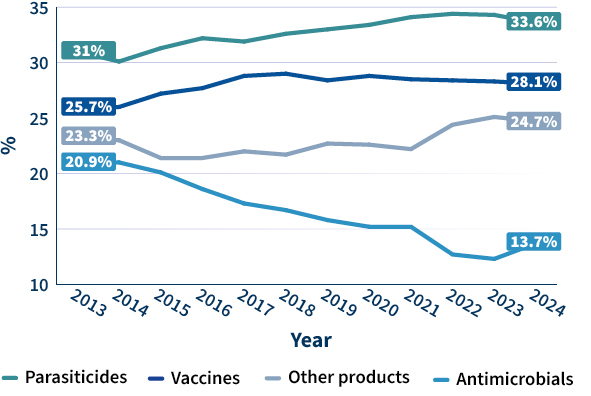
Sales by product category (2013–2024)2CEESA, the Global Animal Health Industry in Profile 2024, https://ceesa.eu/publication/
60%
of animal health sales are in vaccines and parasiticides. This reflects a shift to prevention and new product launches that align with global animal health priorities.*
*Data is provided by CEESA, the Executive Animal Health Study Center, which compiles global sales data. Diagnostics is not included in their figures.
GLOBAL MARKET SIZE & GROWTH
Billions invested in new innovations and solutions.
A recent report found that over just a 4 year period (2019-23):3HealthforAnimals, 2023 Roadmap Progress Report, https://healthforanimals.org/reports/roadmap-progress-report-2023/

The sector invested an estimated
$6.3B
in R&D

Delivering
71
new vaccines

Delivering
28
new diagnostics tools
This was alongside new product launches in parasiticides, nutrition products and other areas, underscoring its position as a high-innovation industry.
GLOBAL MARKET SIZE & GROWTH
Pet spending is booming worldwide.
Size of the Global Pet Industry4Bloomberg Intelligence, Global Pet Economy 2024

USA:
$150B
(2024)

Europe:
$130B
(2024)

Globally projected to increase to
$500B
by 2030
Consumer spending on pets is growing (up to 7% annually in the US) as surveys show households consider the animals to ‘be like family’.5Morgan Stanley, The Pet Industry Has Plenty of Lives Left, https://www.morganstanley.com/ideas/pet-care-industry-outlook-2030
FOOD-PRODUCING ANIMAL OPPORTUNITY
Livestock health is a resilient, critical industry.
Total livestock animals worldwide6UN Food and Agriculture Organisation, FAOSTAT, https://www.fao.org/faostat/en/
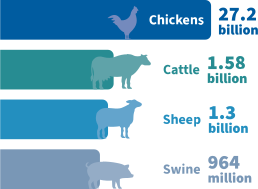
Livestock production will increase to feed a growing population, while a desire for sustainable production means improved health will be a cornerstone of growth.
FOOD-PRODUCING ANIMAL OPPORTUNITY
Meeting future demand will require healthy, efficient animals.
Meat consumption is expected to rise across all categories in the next decade (2025-34):7OECD/FAO (2025), OECD-FAO Agricultural Outlook 2025-2034, https://doi.org/10.1787/601276cd-en

Poultry meat:
+21%

Beef:
+13%

Pork:
+5%

Dairy:
+10%
Sustainability meeting demand depend on strong animal health systems.
FOOD-PRODUCING ANIMAL OPPORTUNITY
Disease control delivers economic and climate benefits.

Every 1% reduction in global beef and dairy cattle disease rates increases producer revenue by8Oxford Analytica, Animal Health and Sustainability – A Global Data Analysis, https://healthforanimals.org/reports/animal-health-and-sustainability/
$6 billion
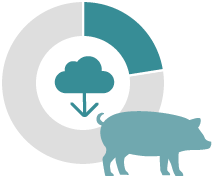
Controlling PRRS, a deadly disease in pigs, reduces swine emissions by9Capper JL. The impact of controlling diseases of significant global importance on greenhouse gas emissions from livestock production. One Health Outlook. 2023
22.5%
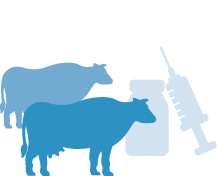
Every 2 cattle vaccinated globally is associated with
1 person
avoiding hunger10Oxford Analytica, Animal Health and Sustainability – A Global Data Analysis,
https://healthforanimals.org/reports/animal-health-and-sustainability/
ECONOMIC CONTRIBUTION
Animal health: $608B economic value in the U.S. alone.
Each year, the U.S. animal health sector creates:11NDP Analytics, The Economic and Social Contributions of the Animal Health Industry, December 2022, https://ahi.org/wp-content/uploads/AHI-Primer-December-2022-Final-w-Infographic.pdf

$608 billion
in economic output
($13.8b direct; $594b indirect)

$74.5 billion
in wages

1.5 million
jobs supported
ECONOMIC CONTRIBUTION
A research-driven sector spanning 27 countries.
The European animal health sector drives innovation and supports skilled employment:12AnimalhealthEurope, Industry in Figures, https://animalhealtheurope.eu/facts-and-figures/

€700 million
annual R&D investment

52,000
direct jobs created

Operations across
27 countries
(production, R&D, and/ org logistics)
INNOVATION & R&D
One of the most R&D-intensive industries worldwide.

Innovative animal health companies invest
7–8%
of revenue into R&D

Equal to
approximately
$3
billion
worldwide every year
INNOVATION & R&D
Investments in innovation are re-shaping animal care.
The Virtual Vet will See you Meow

The Clues to Longer Life That Are Coming From Dogs

The pet economy: Next frontiers in pharmaceuticals

Next-Gen technologies that are transforming animal care

Uptrend of AI Technology in Veterinary Medicine Today

The Promising Potential of AI Tools in Veterinary Medicine

Biotech firms are looking to extend the lives of our pets

From artificial intelligence to new vaccines, breakthroughs are transforming animal health into one of the world’s most innovative industries.
LOOKING AHEAD – GROWTH DRIVERS
Growth fueled by pets, protein, innovation, and sustainability.
Four Megatrends

Rising pet ownership

Growing global demand for animal protein

Robust innovation pipelines

Opportunity to drive sustainability

These trends position animal health as a long-term growth sector
- 1Animal Health Industry Rankings 2024, S&P Global, 19 Aug 2025 https://connect.spglobal.com/document/show/phoenix/6065558 ↩︎
- 2CEESA, the Global Animal Health Industry in Profile 2024, https://ceesa.eu/publication/ ↩︎
- 3HealthforAnimals, 2023 Roadmap Progress Report, https://healthforanimals.org/reports/roadmap-progress-report-2023/ ↩︎
- 4Bloomberg Intelligence, Global Pet Economy 2024 ↩︎
- 5Morgan Stanley, The Pet Industry Has Plenty of Lives Left, https://www.morganstanley.com/ideas/pet-care-industry-outlook-2030 ↩︎
- 6UN Food and Agriculture Organisation, FAOSTAT, https://www.fao.org/faostat/en/ ↩︎
- 7OECD/FAO (2025), OECD-FAO Agricultural Outlook 2025-2034, https://doi.org/10.1787/601276cd-en ↩︎
- 8Oxford Analytica, Animal Health and Sustainability – A Global Data Analysis, https://healthforanimals.org/reports/animal-health-and-sustainability/ ↩︎
- 9Capper JL. The impact of controlling diseases of significant global importance on greenhouse gas emissions from livestock production. One Health Outlook. 2023 ↩︎
- 10Oxford Analytica, Animal Health and Sustainability – A Global Data Analysis,
https://healthforanimals.org/reports/animal-health-and-sustainability/ ↩︎ - 11NDP Analytics, The Economic and Social Contributions of the Animal Health Industry, December 2022, https://ahi.org/wp-content/uploads/AHI-Primer-December-2022-Final-w-Infographic.pdf ↩︎
- 12AnimalhealthEurope, Industry in Figures, https://animalhealtheurope.eu/facts-and-figures/ ↩︎